
A: Honestly? Probably not what's on the profile.
The profile is true — all of it — but it's the version of yourself you construct when you're trying to make a first impression. On a beach, with good wine and the sun doing that thing it does in the last hour before it sets, the constructed version tends to fall away.
So here's what I'd probably tell you.
I grew up in a small town in California that I couldn't wait to leave and now think about more than I expected to. I got out on ambition and a scholarship and didn't look back for twenty years. I'm looking back now. I'm not sure what to do with that yet.
I have a screenplay I've been working on for two years that I think might be the best thing I've ever written. I'm terrified to finish it because finishing it means finding out if I'm right.
I'm happier now than I've ever been. I say that without qualification and I mean it completely. Not in spite of the unconventional choices — because of them.
And I'd probably tell you that this — right here, this beach, this wine, this conversation that's going somewhere neither of us planned — is exactly the kind of thing I left the other life for.
Then I'd refill your glass and ask you something.
A: 1. A notebook.
Not a phone. An actual notebook, with a pen that writes the way I think — which is to say, not in a straight line.
2. A city I haven't been to yet.
There always has to be one on the horizon. A trip I'm planning, a place I'm reading about, somewhere I haven't figured out yet. The anticipation is half the point. The moment I stop having somewhere new to go is the moment I'll know something has gone wrong.
3. Good coffee, made properly.
Not as a caffeine delivery system. As a ritual.
4. A story I'm working on.
There has to be something on the page I'm trying to solve. A scene that isn't working yet, a character I haven't figured out, a structural problem I'm turning over in the back of my mind while I'm doing everything else. Without that, I feel unmoored in a way I can't entirely explain.
5. Physical contact that means something.
Not performance. Not transaction — or not only transaction. The kind of touch that's actually present. A hand on an arm that says I see you. The specific weight of another person choosing to be close to you. I spent years in a life that was full of people and starved of that. I don't do that anymore.
A: I chose this.
Not as a last resort. Not because something went wrong. Not because the other options ran out. I chose this deliberately, with full information, after a long and successful career doing something entirely different — and I would make the same choice again tomorrow.
I think that matters more than people realize.
There's an assumption that tends to follow men in this space — that the story behind it is one of desperation or damage or a life that didn't go as planned. My story is the opposite. My life went exactly as planned, and at some point I looked at the plan and decided it wasn't the right one.
What I do now is honest. It's mine. And it makes me genuinely happy in a way that the other life, for all its credentials and compensation, never quite managed.
So if there's one thing everyone should know: I'm not here despite my life. I'm here because of it. The whole thing — the law degree, the firm, the years of precision and discipline and showing up — led me here. And here, it turns out, is exactly where I want to be.
That's not a tragedy. That's the story.
A: I'll give you the honest list, not the curated one.
I write screenplays. I started keeping a journal at nineteen and somewhere in my forties it evolved into something more structured — characters, scenes, stories I couldn't stop thinking about until I put them on the page. I don't know yet what will come of it. I know I can't stop doing it.
I run. Early mornings, before the city gets loud. Four or five miles, nothing heroic. It's less about fitness and more about the forty minutes of silence where I'm not accountable to anything or anyone.
I read constantly and indiscriminately. Biography, history, literary fiction, the occasional thriller when I need my brain to stop performing. I have a particular weakness for writers who are also funny — Wodehouse, Waugh, early Nora Ephron. I think humor is the most underrated form of intelligence.
And I travel. Which I've already told you about. But it belongs on this list because it's not a vacation for me — it's the thing I organize the rest of my life around.
Spare time, for me, is just time I've decided to spend on the things that make me feel most like myself. I've gotten very protective of it.
A: I pay attention when most people have already stopped.
That's it, really. That's the whole answer. But let me tell you what it looks like in practice.
In a conversation, the extra mile is the follow-up question — the one that goes one layer deeper than where most people stop. The one that says: I heard what you said, and I'm interested in what's underneath it. Most people stop at the surface because the surface is easier and safer. I don't.
In my work, the extra mile is caring about the outcome after I've already been paid. The screenplay that's technically done but not quite right yet. The argument that's legally sound but could be more precise. I've never been able to hand something over and call it finished if I know it could be better. That's not discipline — it's just how I'm wired.
In the way I take care of myself — the training, the sleep, the food, the reading — the extra mile is consistency over years, not intensity over weeks. Anyone can be disciplined for a month. The people who actually look and feel the way they want to at 47 are the ones who made small, unglamorous choices every day for a long time. That's the mile most people don't want to run.
A: I write. Not for anyone yet — just for the discipline of it and the pleasure of finding out what I actually think once I'm forced to put it into sentences. I've been keeping a journal since I was nineteen. Somewhere in the last few years it started turning into screenplays. I'm told they're good. I'm choosing to believe that.
I travel. Already covered that, but it belongs here too because travel isn't an obligation for me — it's the thing I look forward to most. New city, new context, new version of myself for a few days. I find that genuinely restorative in a way that a week at a spa never has been.
I read obsessively and eclectically. Biography, history, literary fiction, the occasional thriller when I need my brain to stop working so hard. I have strong opinions about books and I'll share them if you ask and sometimes if you don't.
I go to the theater. Not as culture consumption — as research. I'm interested in how stories work, how a room full of strangers agrees to believe something together for two hours. That still fascinates me.
And I spend time with interesting people. Which, if I'm being honest, is the through-line in all of it.
A: Sydney. 2006. Mardi Gras. My first time traveling alone.
I was twenty-something, freshly out of law school, and I had exactly enough money for the flight and the hostel and the stubborn conviction that I needed to go somewhere that had nothing to do with who I was supposed to become. I chose Sydney because it was as far from New York as I could get without falling off the planet.
I didn't know anyone. I didn't have a plan. I had a backpack and the specific freedom that comes from being completely unknown in a city of strangers.
And then I ended up on a stage at Sydney Mardi Gras, dancing with Kylie Minogue.
I'm not going to oversell it — it was a moment in a sea of moments that night, and she was performing for fifty thousand people, not for me specifically. But I was on that stage. I was in that moment. And something shifted.
That trip taught me that the most alive I ever feel is when I'm somewhere new, with no role to play, no reputation to protect, and no one who knows my name.
I've been chasing that feeling ever since. Turns out it's a very good way to live.
A: Most people in this space are selling fantasy. I'm selling reality — and it turns out reality, done well, is considerably more compelling.
The fantasy is easy to spot. The performance of desire. The scripted warmth. The carefully curated version of a person designed to be exactly what you think you want. It's fine for what it is. It's just not what I do.
What I offer is a person. An actual, specific, complicated, fully-formed person who has lived enough to be interesting and made enough mistakes to be honest about it. I'm not a blank canvas for your projection. I have opinions. I'll disagree with you. I'll say the thing you didn't expect. And somehow — I've been told this enough times to believe it — that's exactly what makes it work.
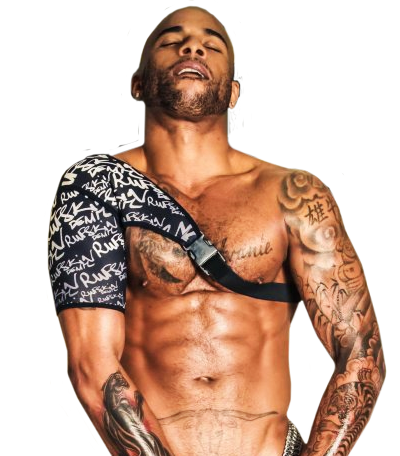
I also stand out physically, and I'll own that without false modesty. I'm tall, built, and I take care of myself in a way that shows. But I've learned that the body gets you in the door. What keeps someone coming back — and they do come back — is everything else.
The other thing is range. I can sit across from you at a Michelin-starred restaurant and hold my own in a conversation about anything from geopolitics to the second act of a film you loved. I
A: I've been asked this in job interviews, depositions, and therapy. The answers were different every time. This one I'll get right.
Presence. I've already said this, but it bears repeating because it's the foundation of everything else. When I'm with you, I'm with you. Not managing my next thought, not performing attentiveness — actually there. People feel that. It's rarer than it should be.
Curiosity. I'm genuinely interested in people. Not as a social skill — as a fact about how I'm wired. I want to know what you think about things that matter, what you've changed your mind about, what you're afraid of that you've never said out loud. I find almost everyone interesting if I ask the right questions. I've gotten very good at asking the right questions.
Discretion. Not the kind you have to ask for. The kind that's already there. I understand what privacy means to people who have something worth protecting, and I treat it accordingly. Always.
Honesty. I don't flatter. I don't perform. If I'm enjoying myself, you'll know because it's real. If something isn't working, I'll say so — calmly, directly, without drama. I think that's a form of respect most people don't offer.
A: The person who has everything and is quietly starving for something real.
That's who finds me. Not always, but often enough that I've stopped being surprised by it. Successful people — executives, attorneys, surgeons, people whose names appear in places — who have built lives that function beautifully on paper and leave them profoundly alone in practice. They're not looking for someone to impress them. They're looking for someone who can't be impressed by the things that usually work.
I'm that person.
I don't perform enthusiasm I don't feel. I don't ask questions I don't care about the answers to. I'm not going to tell you you're fascinating because you're paying me to be in the room. If I find you fascinating — and I often do — you'll know it because it's real.
My niche, if I'm being precise, is intelligent company with genuine physical presence. I'm also — and I say this without apology — very good in bed. Not because I perform. Because I pay attention. The same quality that makes me a good listener makes me a good lover. I notice what works. I adjust. I'm not in a hurry, and I don't treat it like a transaction even when it technically is one.
That's the niche.
A: I travel as often as I can justify it, and I've gotten very good at justifying it.
Four, five times a year internationally. More domestically. I have a bag that's never fully unpacked and a passport that's earned its wear. New York is home — I mean that — but I've always thought home is more interesting when you leave it regularly and come back with something you didn't have before.
There's an honesty that happens between strangers in new places — a willingness to be present, to be curious, to take a risk you wouldn't take at home — that I find genuinely intoxicating. Some of the most alive I've ever felt has been in a hotel room in a city I'd never been to before, with someone I met twelve hours earlier and will probably never see again. There's nothing casual about that, despite what people assume. Those encounters have their own kind of intensity precisely because they're temporary.
I'm not a homebody. I'm a person who needs friction, novelty, and the occasional reminder that the world is considerably larger and more interesting than my zip code.
New York is where I live. Everywhere else is where I find out what I'm made of.
A: I'll be direct: I look good. I know it, I work for it, and I don't pretend otherwise.
Here's what that actually looks like.
I lift four days a week — compound movements, nothing exotic. Squats, deadlifts, bench, rows. The fundamentals, done consistently, for years. I'm not chasing a number on a scale or a look I saw in a magazine. I'm building something that functions and happens to photograph well. There's a difference, and it shows.
I run two or three mornings a week. Not long — four or five miles. Enough to stay sharp, clear my head, and remind myself that the body is capable of more than sitting at a desk pretending to be important.
Diet is simple because complicated doesn't last. Protein at every meal. Vegetables that aren't an afterthought. I cook most of what I eat, which means I know what's in it. I drink — good wine, good whiskey, occasionally both — but I don't drink carelessly. Alcohol is a pleasure, not a habit.
I sleep eight hours. Non-negotiable. I've watched too many men my age trade sleep for productivity and end up with neither.
The result is a body I'm comfortable in and comfortable being seen in.
A: I live deliberately. That's the shortest version.
I wake up early — not because I have to, but because I like the city before it remembers it's supposed to be loud. I make good coffee. I read something that has nothing to do with anything I'm working on. I take that hour seriously.
I move. I'm not someone who talks about fitness as a lifestyle — I just don't want to be the person who can't keep up. I run. I swim when I can. I think better when my body isn't staging a quiet protest.
I eat well and I eat with intention. I know the difference between a meal and an experience, and I prefer the latter. I've had dinner in places that cost more than my first car and I've had the best meal of my life at a table with a paper tablecloth in a town I couldn't find again on a map. Both were worth it.
I travel when the work allows it, and I try to go somewhere that requires something from me — a language I don't speak, a city I have to figure out, a situation I can't entirely control. I think that's where you find out who you actually are.
What makes me who I am? Honestly — the choices I made after the life I was supposed to want stopped fitting. What's left is the real version.
A: I write.
Not professionally — or at least, not yet. But I've been keeping a journal since I was nineteen, and somewhere in the last few years it started turning into something else. Stories. Characters. People I've met and couldn't stop thinking about. Moments I wanted to hold onto before they disappeared.
I think that's why I'm good at this, actually. I'm a writer who hasn't published anything yet, which means I'm still in the stage where I'm just paying attention. Collecting. Noticing the things most people walk past. The way a city sounds at 2am when the bars are closing. The specific silence of a hotel room in a foreign country. The look on someone's face when they say something true by accident.
I find people genuinely interesting. Not as a professional courtesy — as a fact. Every person I spend time with has a story I don't know yet, and I'm always curious about it.
The other thing — and this is the personal part — is that I'm happier now than I've ever been. Not in spite of the unconventional choices. Because of them. I spent a long time building a life that looked right from the outside and felt hollow from the inside. I don't do that anymore.
That's not a small thing.
A: I don't do anything I don't mean.
That sounds simple. It isn't. Most people are running a constant negotiation between what they want, what they think they should want, and what they're willing to admit to either. I stopped doing that. It cost me a marriage, a partnership, and a version of my life that looked very good from the outside. I don't regret it.
What that means practically: if I say I'll be somewhere, I'm there. If I say I'm interested, I am. If I'm not, I'll tell you — politely, directly, without the performance of enthusiasm I don't feel. I think that's a form of respect most people don't offer and almost everyone wants.
I'm also not going to pretend this arrangement is something it isn't. You're paying for my time. I think that's honest. I think it's cleaner than a lot of the alternatives. And I think the people who are right for this already know that — which is why they're here instead of somewhere else.
One more thing: I'm discreet by nature, not just by policy. What happens in my company stays there. Not because I signed something. Because I actually understand why it matters.
If any of that sounds like what you're looking for, we'll get along fine.
A: What do you enjoy most about yourself?
Honestly? My ability to be present.
I spent twenty-two years in a profession that rewarded the opposite — always preparing for the next argument, the next deposition, the next thing that could go wrong. I was very good at it. I was also, for most of that time, somewhere else entirely even when I was in the room.
I'm not that person anymore.
When I'm with someone now, I'm actually there. I notice things. The way a person holds a glass when they're nervous. The sentence they started and decided not to finish. The thing they're trying to say underneath the thing they're saying. Most people move through conversations like they're checking boxes. I don't.
I think that's rare. I know it's valuable. And I enjoy it — not as a skill I've developed, but as the thing I like most about who I became once I stopped performing the version of myself I built for other people.
That, and I make excellent company at dinner.